
How to Reduce Tire Wear in Your Fleet Using TPMS
Table of Contents
Incorrect tire pressure is one of the most common—and at the same time most underestimated—causes of increased operating costs and unexpected vehicle breakdowns. This is particularly true for heavy-duty trucks and commercial vehicles, where tire pressure has a direct impact on road safety, operating costs, and your company’s environmental footprint.
Tire pressure that is significantly lower than recommended can cause the tire to overheat, wear out more quickly, and, in the worst-case scenario, blow out. This not only poses an immediate danger to the driver and other road users, but also results in significant costs associated with vehicle downtime and unexpected repairs.
In everyday practice, it is often small fluctuations in pressure—as little as 0.2 to 0.5 bar—that accumulate over time and gradually become a problem. Many fleet managers still rely on visual inspections or sporadic manual measurements. However, given today’s technology, these methods are no longer adequate and pose a significant risk.
To help you avoid unnecessary downtime, high indirect costs, and other issues with your fleet, this blog provides all the information you need about tire pressure monitoring systems and tire management for your vehicle fleet.
The costs associated with improper tire pressure
At first glance, tire pressure seems to have little impact on a vehicle’s condition. However, it can directly influence several cost factors in fleet management:
- Increased tire wear : Too low tire pressure increases the tire’s contact area with the road, causing greater deformation of the tire sidewalls. This leads to excessive overheating and accelerated, uneven wear.
- Increased fuel consumption : A larger contact patch increases the rolling resistance, requiring more energy to move the tires. The result: higher fuel consumption and increased CO₂ emissions. Studies show that a drop of just 0.5 bar in tire pressure can increase fuel consumption by up to 5%—a significant cost factor, especially for large fleets!
- Unnecessary repairs : Over time, incorrect tire pressure can cause damage to the chassis, suspension, and rims. This damage often goes unnoticed until costly repairs become necessary.
Added to this are indirect costs resulting from unplanned shop visits, missed deliveries, or the need for replacement vehicles. In times of supply shortages and rising operating costs, every unplanned breakdown can have a significant impact on your bottom line.
Tips on tire pressure:
When should you increase your tire pressure?
- When carrying heavy loads or driving long distances on the highway, as the weight puts more pressure on the tires
- In hot weather, the rubber in the tires expands, causing the pressure to drop
An intelligent TPMS system can automatically provide recommendations or generate alerts when the tire pressure falls outside the optimal range.
When should you slightly lower the tire pressure?
- When driving on rough terrain, slightly reducing tire pressure can improve traction
- In winter conditions, slightly lower tire pressure (within the manufacturer’s recommended range) can increase the contact patch and thus improve traction
- When outdoor temperatures are very low, because cold air takes up less space, which reduces the pressure
What impact does tire wear have on vehicles?
Incorrect tire pressure first manifests as premature wear, which often leads to serious problems. “Tire wear ” refers to the gradual deterioration of the tire material, particularly in the tread area. This is caused by friction, the loads the tires carry, temperature, and road conditions.
With every rotation, the tire is subjected to mechanical forces that cause the rubber to wear down. This phenomenon is particularly pronounced in commercial vehicles such as trucks, vans, and buses, as they are frequently loaded, travel long distances, and operate under demanding conditions.
A distinction is made between normal, gradual wear and irregular or premature wear. The latter is often a sign of technical malfunctions or improper adjustments: incorrect tire pressure (too low or too high), improper wheel alignment, or uneven load distribution.
Excessive or uneven wear can have serious consequences:
- Reduced road safety : loss of traction, longer braking distances, increased risk of hydroplaning
- Excessive fuel consumption : Unevenly worn tires increase rolling resistance
- Shorter tire life : More frequent replacements lead to higher costs
How can you tell if your tire pressure is too low or if your tires are wearing out prematurely?
To ensure that your vehicles operate safely and smoothly, it is essential to monitor tire pressure regularly. Even slight deviations can lead to increased wear and affect the vehicle’s handling.
What are the effects of low blood pressure?
- Significant tire deformation and excessive heat buildup
- Uneven wear, particularly on the shoulders of the tire
- Increased rolling resistance → excessive fuel consumption
- Poorer handling and longer braking distances
- Increased risk of tire damage and sudden loss of pressure
What are the effects of high blood pressure?
- Reduced contact area, rapid wear in the center of the tire
- Reduced ride comfort (stiffer ride)
- Reduced traction on wet roads → risk of hydroplaning
- Increased sensitivity to potholes and road irregularities
- If the load is significantly excessive: risk of tire blowout if an obstacle is encountered
Improper tire inflation is often not detected until damage has already occurred. Here are the warning signs to watch for in your fleet:
Common signs of improper tire pressure
Unusual Unusual tire wear
- Wear in the center: usually caused by excessive pressure
- Wear on the sidewalls: often caused by tire pressure that is too low
Unstable vehicle behavior
- A feeling of instability or sluggish steering response
Longer braking distances
- Especially in rainy weather or on slippery roads
Abnormally high fuel consumption
- The tank empties faster without any obvious change in usage
Increased frequency of flat tires or tire defects
- More frequent air leaks, bursts, or cracks
Different tread depths on the same axle
- A significant discrepancy may indicate an alignment or pressure issue
How can you minimize tire wear in your fleet? Implementing tire pressure monitoring systems (TPMS) is an effective solution. These devices provide automated, continuous monitoring of tire pressure. Integrated with your fleet management tools, they also allow you to collect valuable data on vehicle condition and take swift action in the event of an anomaly.
What is a TPMS, and why is it important?
The Tire Pressure Monitoring System (TPMS), is an electronic system used to monitor a vehicle’s tire pressure. There are two main types:
- Indirect TPMS : It does not measure tire pressure directly, but calculates it based on wheel rotation speed and ABS data. These systems are cost-effective, but imprecise and prone to false alarms. Furthermore, they often detect gradual pressure loss too late.
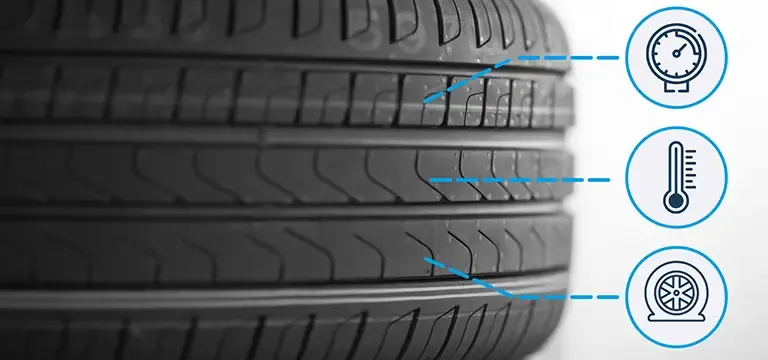
- Direct TPMS : It uses special sensors built into the tires that accurately measure pressure and temperature. This data is transmitted via radio to the control unit. TPMS sensors are now standard equipment in modern fleets.
For commercial vehicle fleets, direct systems are clearly more advantageous. They provide accurate real-time data and integrate more easily with digital systems. As a fleet manager, you should therefore ask yourself the following question:
Is our tire pressure monitoring system up to date, and are we making the most of the data it generates?
How can you reduce tire wear?
Tire wear is one of the biggest expenses in fleet management. But how can it be minimized? Here are a few ideas:
- Continuous tire pressure monitoring: Regularly checking tire pressure is the most effective way to reduce tire wear. Ideally, pressure should be checked every two weeks or before long trips. In modern fleets, this can be automated using systems like TPMS, which continuously monitor pressure and alert drivers if there is a deviation.
- Regular wheel alignment checks: Improper suspension alignment can lead to uneven tire wear. It is particularly important to check alignment after an accident or after driving over significant obstacles. For heavy-duty truck fleets, this check is all the more essential due to the heavy loads.
- Rotate your tires: To ensure even wear on all tires, they should be rotated regularly. Depending on the vehicle type and drivetrain, the manufacturer recommends different rotation patterns.
- Optimize Loading: Overloading and uneven load distribution cause excessive tire wear. Make sure vehicles are not overloaded and that the load is distributed evenly.
- Avoiding Incorrect Tire Pressure: As described above, proper tire pressure is essential for tire longevity. Too low a pressure increases flexing and heat, while too high a pressure causes excessive wear in the center of the tire.
- Adjust tire pressure for the seasons: Adjust tire pressure according to seasonal temperature changes: it decreases in cold weather and increases in hot weather. As a general rule, pressure varies by about 0.1 bar for every 10°C.
- Organize maintenance and inspections: Implement a systematic maintenance program that includes regular tire inspections. Document the tread depth, type of wear, and age of the tires.
Despite all these manual measures, the biggest challenge remains the continuous monitoring of a large fleet of vehicles. This is where modern fleet management solutions, such as Echoes’ CarFleet, come into play, offering automated and proactive monitoring through smart connectivity and data analysis.
The integrated solution for tire pressure monitoring
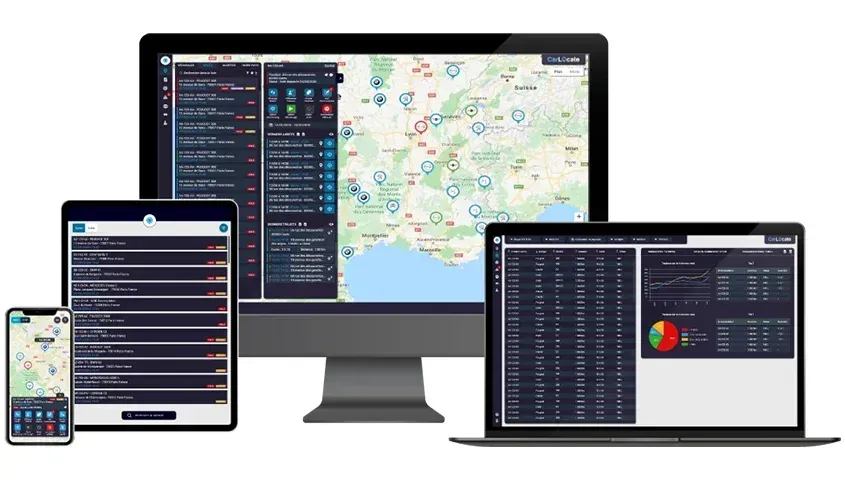
With CarFleet from Echoes, tire pressure monitoring becomes an integral part of comprehensive fleet management. The software continuously analyzes all key vehicle parameters, including tire pressure. Monitoring is not done in isolation, but in the context of other data such as:
- Engine condition and oil temperature
- Distance and travel time
- Location data and geofencing zones
- Accident reports and maintenance schedules
- Driving behavior and eco-friendly driving
For example, For example, CarFleet detects slow air leaks before they become critical. Combined alerts provide timely information about risk factors. The fleet manager can react immediately, for example by scheduling targeted maintenance or rerouting the affected vehicle.
What sets CarFleet apart is its integration of all vehicle data of all vehicle data on a single platform. Thanks to a direct connection to the vehicles’ OEM systems, data is collected in real time—without the need for additional hardware or manual intervention. This solution stands out clearly from traditional systems, which often rely on additional sensors or regular manual data entry.
CarFleet Features
There are numerous benefits and use cases for fleet managers:
- Real-time monitoring of all vehicles via a central platform
- Proactive maintenance planning based on actual needs rather than fixed intervals
- Seamless integration into existing operational processes and maintenance systems
- Immediate alerts in the event of a loss of pressure, tire malfunctions, or combined risks
- Automatic detection of when a tire pressure check is needed
- Predicting failures before they occur
Monitoring tire pressure saves money
Tire pressure is no longer a minor issue. It affects the profitability, safety, and environmental footprint of your entire fleet. With the right technology, it becomes a real driver of efficiency, delivering valuable savings and enhanced safety.
Modern tire pressure monitoring systems and TPMS sensors, combined with intelligent software like CarFleet, offer you significant advantages:
- Early detection of pressure drops before they become critical
- Extended tire life thanks to optimal tire pressure and timely maintenance
- Lower fuel costs thanks to reduced rolling resistance
- Improved road safety thanks to better handling stability
- Reducing CO2 emissions through more efficient vehicle operation
Echoes uses vehicle data sourced directly from automakers, regardless of make or model. This data is converted into a universal format, allowing you to unlock the hidden value of your fleet data in just a few minutes— the perfect foundation for a modern tire pressure monitoring system (TPMS).
Modern systems automatically determine the optimal time to check tire pressure—continuously and in real time. Regular maintenance intervals are replaced by data-driven, needs-based interventions (predictive maintenance). This allows you to reduce tire wear in your fleet over the long term while maximizing operational safety.
Disclaimer: The advice, deadlines, and fines mentioned herein have been compiled with the utmost care and based on the best available information. No guarantee is made as to the completeness or exclusivity of the content. The information provided is not a substitute for legal advice or official information from government agencies. It is provided for informational purposes only. No guarantee is given as to its validity in the event of a dispute.