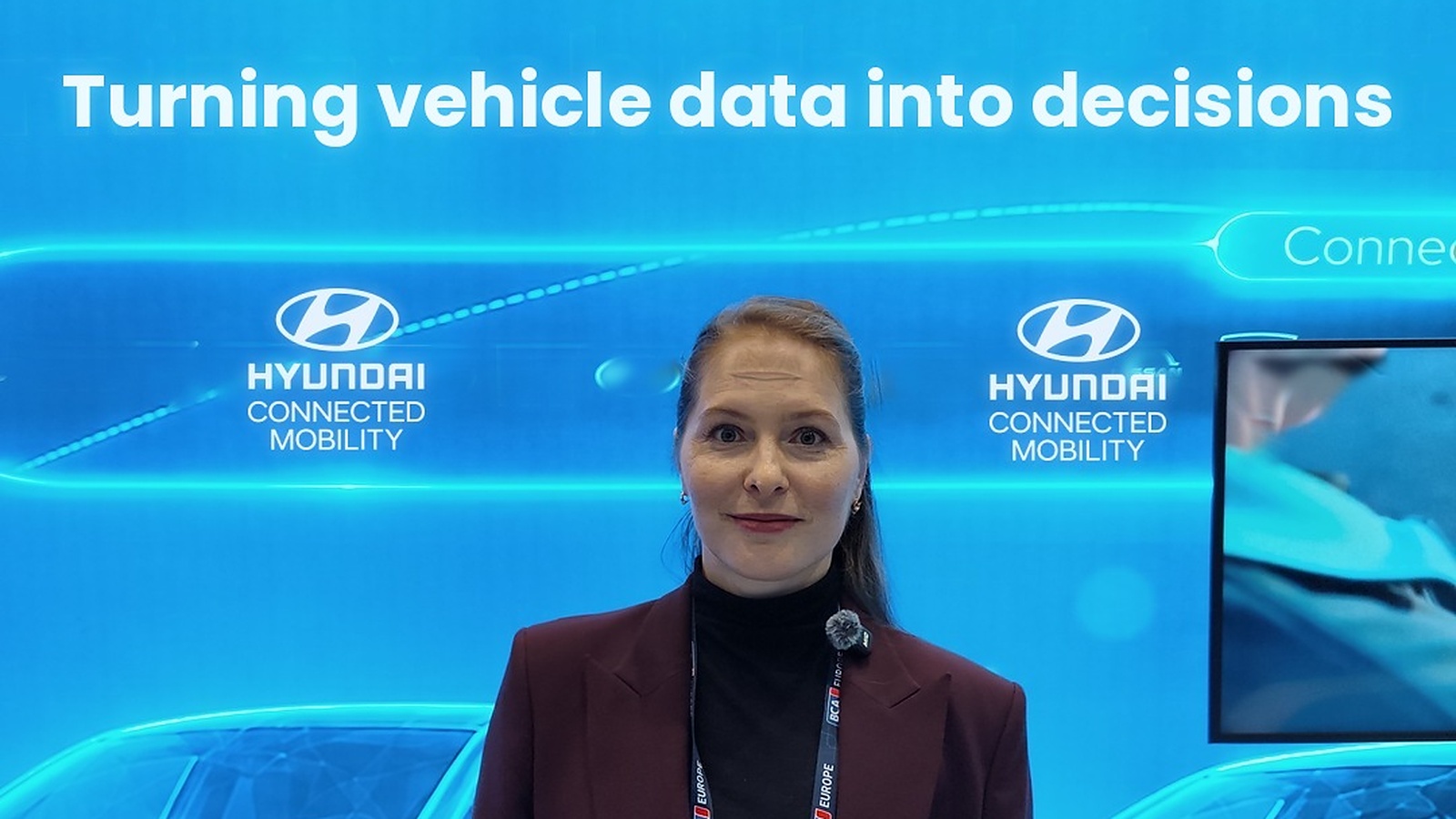
Vehicle data on its own is no longer enough to stand out. At Fleet Europe Days in Lisbon, we asked Ekaterina Abramovich, Head of Data Platforms & Data Services at Hyundai Connected Mobility, why Hyundai is moving from data to remote commands, and what that will mean for fleet managers.
Hyundai Connected Mobility is the Hyundai business that brings connected-vehicle data and services to fleets and their partners in Europe. Echoes was one of its first partners when it launched data services in Europe. Here is what Ekaterina told us, lightly edited for reading.
Why is Hyundai developing remote services?
Ekaterina was clear that data alone is no longer where the value lies.
“Now, data is becoming a commodity, and what is going to differentiate us is remote commands. It’s a strategic direction for us, and it’s going to help us to enhance a lot of different use cases.”
She gave two examples of what that looks like in practice.
“With remote immobilisation, we can aid the recovery use case. Or we can optimise operational workflows with preset remote commands.”
For fleets, this is the step from knowing what a vehicle is doing to being able to act on it, without anyone having to be next to it.
Why should fleet managers prioritise OEM data over aftermarket devices?
Her answer started with two words: cost and convenience.
“When fleet managers are using native telematics, they don’t need to pay for an aftermarket device, wait till it’s delivered, install, replace, remove.”
She also pointed to reliability. Every box fitted to a vehicle is one more thing that can fail.
“With native telematics, you have fewer breaking points where something can go wrong. Plus, you are getting the data quality, which is important.”
What does Echoes bring to the partnership?
We asked what Echoes brings as a telematics service provider, compared with others.
“We were launching data services in Europe with Echoes as one of our first partners. They are easy to work with, professional, and native telematics first. So they bring a lot of experience on how to turn our data into insights for the fleet managers.”
Native telematics first is how Echoes was built. There was never a hardware business to protect, so all of our work goes into making OEM data useful for the people who run fleets.
Which connected services are coming next?
Ekaterina described a roadmap in three stages.
In the short term, remote commands: opening and closing doors, starting and stopping EV charging, and battery preconditioning. Hyundai is also working on commands that set policies on the vehicle.
“It’s similar to what your IT team is doing with your work laptop, allowing you certain actions or not. For example, you would be able to manage your drivers, see if privacy mode is allowed on your vehicles, and bring the vehicle into B2B mode.”
In the mid and long term, more advanced features, starting with driver-level access, which in practice means digital keys. And predictive maintenance combined with over-the-air updates, which, as she put it, will help fleet managers with the uptime of their fleets.
What this means for your fleet
The message from Lisbon was consistent across our OEM Talk conversations. Fleets want data straight from the vehicle, without the cost and fragility of extra hardware. And the next step is not more data, but the ability to act on it remotely.
That is the direction Echoes is building in. We bring OEM data from nearly 40 vehicle brands into one platform, and with Echoes Fleet Agent we are turning that data into decisions.
Our thanks to Ekaterina and the Hyundai Connected Mobility team for joining us in Lisbon.
Want to see what native telematics can do for your fleet? Talk to our team.