The Best Fleet Management Solution in 2026: Our Verdict
Before we get into the details of the comparison, here is a direct answer to the question most fleet managers ask.
If you manage a fleet of cars and vans, often leased from several providers, and still track contracts and servicing in spreadsheets, Echoes Fleet Agent is our pick for the British market in 2026.
Why? Fleet Agent brings each vehicle’s lease contract, maintenance plan and costs into a single schedule. You start with the documents you already have (registration documents, Excel or CSV files), then add live manufacturer data from nearly 40 brands, with no device to install. It projects each contract’s mileage to its end date, estimates excess-mileage costs, and answers your questions about the fleet in plain English. Need real-time tracking or fuel and energy monitoring as well? Echoes CarFleet adds that telematics layer in the same workspace.
That said, the right software for your organization depends on your specific needs. This comparison guide will help you make an informed choice.
Why Use Fleet Management Software in 2026?
A vehicle fleet generates far more data than one might imagine: vehicles, contracts, kilometers, invoices, fuel or energy, accidents, maintenance, tires, insurance, drivers, traffic tickets, and vehicle returns.
In a small organization, a spreadsheet may suffice for a while. But as soon as the fleet becomes more diverse, expands to multiple locations, or involves multiple people sharing the same data, limitations become apparent: manual re-entry, unsynchronized files, missed deadlines, incomplete mileage records, and a lack of visibility into total cost of ownership (TCO).
A vehicle fleet management software meets five main needs:
Are you new to spreadsheets? Check out our free fleet management resources before investing in a solution.
Criteria for Effectively Comparing Fleet Management Software
Is the data based on manual entry, imports, telematics devices, or OEM data transmitted directly by manufacturers? This question determines the freshness, reliability, and precision of your fleet management. It is often the most underestimated criterion.
Does the software meet your actual needs: vehicles, contracts, drivers, fuel, maintenance, claims, tires, taxes, fleet management, TCO, and vehicle return?
Do you need to know the vehicle’s location, mileage, battery level, technical alerts, or real-time trip information? Not all solutions take the same approach or update at the same frequency.
Excellent software only creates value if it’s actually used. Check the dashboards, permissions, export options, ease of data entry, and mobile experience.
Your future tool must integrate with your ecosystem: rental companies, fuel cards, accounting, ERP, HR, maintenance systems, or an internal fleet API.
Evaluate the management of taxes, benefits in kind, traffic tickets, personal data, and reporting obligations. Have these points validated by your finance, HR, legal, and DPO teams.
Choose a solution that’s right for the fleet you’ll have in two or three years: new locations, electric vehicles, light commercial vehicles, car-sharing, and international expansion.
Compare the total cost: subscription, any equipment, installation, setup, training, support, contract term, and additional services. The advertised price is never the true cost.
Comparison Chart of the Top 10 Fleet Management Software Programs for 2026
| Solution | Dominant data type | Fleet profile | Key strength | Pricing |
|---|---|---|---|---|
| Echoes Fleet AgentOUR PICK | Your documents + manufacturer data from nearly 40 brands, no hardware | Companies with 50 to 250+ cars and vans, mostly leased | Contracts, maintenance and costs in one schedule; real-time telematics via CarFleet | Upon request |
| Winflotte 11 | SaaS, imports, ecosystem connections | Medium and large fleets | Administrative and tax management | Upon request |
| GAC Car Fleet | Asset management, connectors, admin data | All sizes | Functional depth and TCO | Upon request |
| FleetNote | Centralized data entry, imports | Microbusinesses, SMEs | Migrating from Excel | To be confirmed |
| Evera Fleet | Centralized data, automation | SMEs and mid-sized companies | TCO, BiK, ESG, electrification | Public offering |
| Avrios | Centralized management, workflows | Multi-site SMEs | Compliance and reporting | Upon request |
| FleetWave | Configurable international platform | Large fleets, diverse assets | International settings | Upon request |
| Webfleet | GPS unit, telematics | Field fleets, light commercial vehicles, delivery | Operational GPS tracking | Upon request |
| Geotab | Telematics, OEM, third-party, BI | Complex, multi-asset fleets | Open data platform | Upon request |
| Samsara | Telematics, cameras, operations | Transportation, logistics, field operations | Driver safety | Upon request |
The 10 Solutions in Detail
1. Echoes Fleet Agent: contracts, maintenance and costs in one schedule, with no hardware
Echoes Fleet Agent brings together the lease contract, the maintenance plan and the costs of every vehicle in a single schedule. It starts from the documents you already have, then adds native manufacturer data when your vehicles are connected. No device to fit, no vehicle downtime.
What this means in practice:

We chose Echoes because it doesn’t require any external hardware installation (and therefore involves no installation costs or the hassle of maintaining a database).
Ideal if: you manage around 50 to 250 cars and vans (larger fleets split their vehicles into several fleets), often leased from several providers, and plan servicing in spreadsheets today.
Check before purchasing: manufacturer-data coverage for your makes and models (our team confirms it before you start), and whether you also need real-time telematics with CarFleet.
2. Winflotte 11 — administrative, financial, and regulatory management
Winflotte 11 is a SaaS software solution designed for fleet managers, with a strong administrative focus: data consolidation, consistency checks, TCO management, and the generation of information useful for tax and regulatory compliance. It is relevant for companies with a mature fleet organization, numerous contracts to track, and strong reporting needs toward management, finance, or purchasing.
Things to check before purchasing: included connectors, data migration terms, available modules, and real-time capabilities.
3. GAC Car Fleet — extensive functional coverage
GAC Car Fleet is a French solution that focuses on in-depth functionality: costs, taxation, contracts, maintenance, claims, and overall management. It is suitable for organizations that need a structured overview of expenses and detailed tracking of the cost per kilometer.
Things to check before purchasing: connection methods with your suppliers, mileage sources, and internal tools.
4. FleetNote — a step-by-step transition away from Excel
FleetNote is designed to centralize data and facilitate the transition from a spreadsheet. The platform covers vehicles, employees, contracts, costs, due dates, and traffic tickets. It’s a great option for small and medium-sized businesses looking to move from manual tracking to a more structured tool.
Things to check before purchasing: scope of automation, available connectors, real-time management, and support options.
5. Evera Fleet — TCO, electrification, and sustainable mobility
Evera Fleet combines fleet management, TCO, tax compliance, benefits in kind, traffic citations, vehicle sharing, and electric vehicle transition analysis. It is of interest to companies that manage internal combustion, hybrid, and electric vehicles simultaneously and have ESG reporting requirements.
Things to check before purchasing: exact source of real-time data, calculation rules used, and included modules.
6. Avrios — structuring workflows and compliance
Avrios focuses on information centralization, workflows, compliance, damage management, and collaborative reporting. It is ideal for teams that work across multiple locations and want to standardize their fleet processes.
Things to check before purchasing: data location, connectors, and availability of support in english.
7. FleetWave — large fleets and international environments
FleetWave (Chevin Fleet Solutions) is a highly customizable international platform designed for complex, multi-country organizations with a variety of asset categories. It goes beyond just the vehicle fleet.
Things to check before purchasing: local coverage in the UK, languages, level of configuration required, and internal resources needed.
8. Webfleet — GPS tracking and field operations
Webfleet is a telematics platform based on a device installed in vehicles and integrated with SaaS software. It meets the needs of field fleets and light commercial vehicle fleets for real-time location tracking, route planning, fuel consumption monitoring, and driving behavior analysis.
Things to check before purchasing: equipment, installation, and maintenance costs; terms of service; and the GDPR framework for employee geolocation.
9. Geotab — telematics data and large-scale integrations
Geotab is a global, open telematics platform capable of integrating data from onboard units, partners, OEMs, or third-party systems. Its key strengths are its rich analytics capabilities and its openness to BI tools and internal information systems.
Things to check before purchasing: data architecture, hardware costs, included integrations, configuration complexity.
10. Samsara — driver safety and connected operations
Samsara combines telematics, onboard cameras, safety data, and operational tools. It is widely used in the transportation, logistics, and construction industries. Its key strength lies in risk prevention and incident documentation.
Things to check before purchasing: cost of equipment, image retention policy, and rules regarding employee notification.
Why Echoes Stands Out: The Issue of Data at the Source
Most fleet management software comparisons focus on features: dashboards, alerts, and data exports. But the real question is this: where does the data that powers these features come from?
There are two philosophies:
A third-party device is installed in each vehicle. It collects data on location, mileage, and driving behavior and transmits it to the platform. This approach involves installation costs, deployment time, physical maintenance of the device fleet, and a data collection frequency that depends on the quality of the hardware.
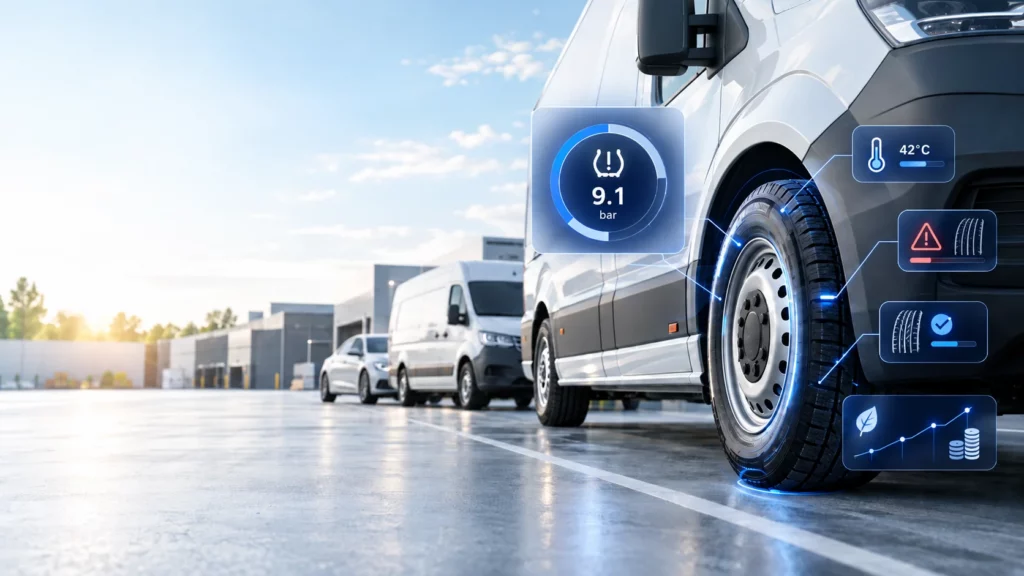
The platform connects directly to automakers’ APIs to retrieve data already generated by the vehicle’s onboard sensors. No additional equipment is required. The data (odometer reading, technical alerts, battery level, fuel consumption, location) comes from the original source, ensuring both reliability and comprehensive coverage.
This fundamental difference translates into several measurable benefits for fleets that adopt the OEM approach:
For multi-brand fleets — which make up the vast majority of corporate fleets in the UK — Echoes consolidates data from different manufacturers into a unified format, enabling objective comparative analyses across brands.
Find out how Echoes consolidates multi-brand data in a single interface.
And when a vehicle isn’t connected yet, Fleet Agent still works from your documents and drivers’ mileage readings.
How to Choose the Right Software for Your Fleet?
Answer these five questions to help you make your choice.
If your priority is managing contracts, total cost of ownership (TCO), tax matters, and refunds, choose fleet management software designed for administrative tasks. If your priority is real-time tracking, field operations, video, or driver safety, choose a telematics platform with a device. If you want both without any hardware, combine Echoes Fleet Agent for contracts, maintenance and costs with CarFleet for real-time telematics.
These units are useful for older or non-connected vehicles, non-road-going assets, or in-vehicle video applications. Native OEM data allows you to connect compatible newer vehicles without any hardware. Availability must be verified for each vehicle.
Don’t choose a platform based on its most impressive features. Choose it for the processes it will actually automate for your teams on a daily basis.
A fleet manager, a management controller, HR, drivers, and management don’t all have the same needs. Request a demo tailored to multiple user profiles.
List the systems to be integrated: fuel cards, rental companies, ERP, accounting, HR, maintenance tools, and CSR reporting. These integrations must be included in the specifications from the outset.
Frequently Asked Questions About Fleet Management Software
What is the best fleet management solution in the UK?
For companies managing around 50 to 250 cars and vans, often leased from several providers, Echoes Fleet Agent brings contracts, maintenance and costs into one schedule. It starts from your existing documents and adds manufacturer data from nearly 40 brands, with no hardware. For field fleets that need video or real-time job tracking, platforms such as Webfleet or Samsara can be complementary.
How much does fleet management software cost?
Rates depend on the number of vehicles, the modules, the contract length and any hardware. Most fleet management software is billed per vehicle per month. Echoes Fleet Agent pricing depends on the modules and the size of the fleet, with no hardware to buy and no installation fees. Always compare the total cost over 36 months, not just the monthly subscription.
What is the difference between software with and without a device?
Software with a device uses equipment installed in the vehicle to collect data (location, driving, video). A hardware-free solution such as Echoes Fleet Agent or CarFleet relies on OEM data transmitted directly by the manufacturers for compatible connected vehicles. The two approaches can be complementary depending on the age and nature of the fleet.
How many vehicles do you need before you need fleet management software?
Yes. Echoes Fleet Agent sets maintenance reminders according to each vehicle’s powertrain, and CarFleet adds native battery level, range, energy consumption and charging history for recent electric vehicles.
Is fleet management software compatible with electric vehicles?
Yes. CarFleet is natively compatible with recent electric vehicles: battery level, range, energy consumption, and charging history. This OEM data also helps optimize the administration of employee benefits for electric vehicles, which are eligible for a 70% tax deduction through 2027.
What does the GDPR require regarding fleet geolocation?
Employee geolocation must be based on a legitimate purpose, require prior notification of the employees concerned, restrict access, and include safeguards outside of working hours. CarFleet natively integrates these rules into its professional geolocation solution. Consult your DPO before any deployment.
From Reactive Management to Connected Management
Good fleet management software should help you make better decisions, not just fill out more spreadsheets.
Before making a decision, identify three things: the data currently missing that prevents you from effectively managing your fleet, the time-consuming tasks that don’t add value, and the risks you want to reduce — whether they involve tax compliance, unplanned maintenance, or uncontrolled mileage.
Echoes Fleet Agent helps companies bring every lease contract, maintenance plan and vehicle cost into one schedule, starting from the documents they already have. Manufacturer data from nearly 40 brands, no hardware to install. Need real-time tracking too? CarFleet adds telematics in the same workspace.