

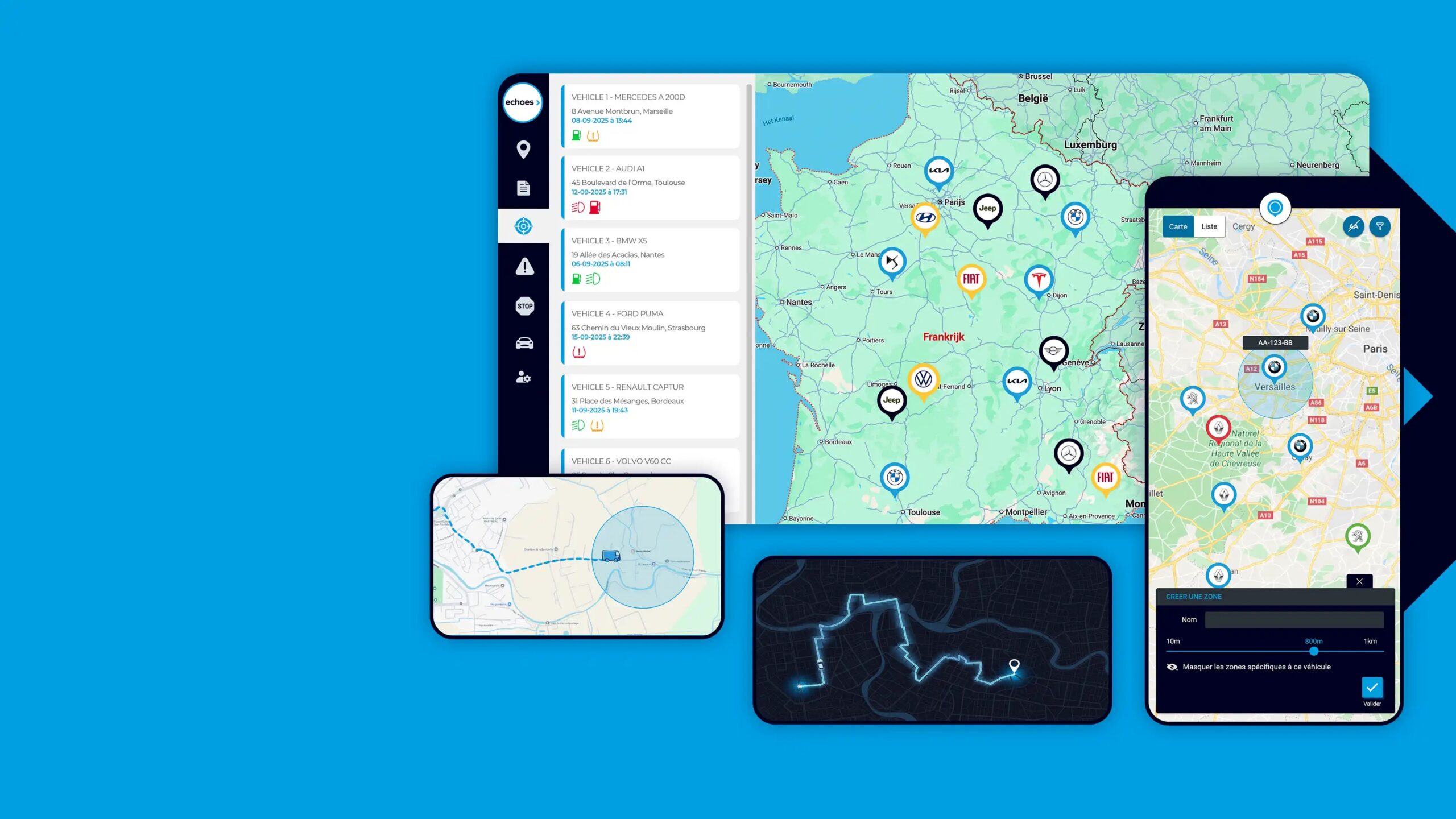
Multi-brand fleets are the norm today and not the exception anymore. Rental companies, leasing firms and large enterprises rarely run a single vehicle make. That reality creates a real problem: how do you manage tracking, maintenance and cost control across dozens of brands without losing visibility?
The answer is no longer to be found in aftermarket hardware. It is hardware-free vehicle tracking powered directly by the OEM. This guide walks through the criteria that matter most when choosing fleet management software, with a focus on the one capability that changes everything: fleet geolocation without a single dongle installed.
Why Vehicle Fleet Management Is Changing
For years, vehicle fleet management meant installing an OBD-II dongle or a hardwired black box in every vehicle. It worked, but it came at a cost. Every install meant workshop downtime. Every dongle was a point of failure, and an easy target for tampering or theft.
Vehicles built after 2018 changed the equation. Most now ship with a factory-embedded modem connected directly to the CAN bus. That means certified odometer readings, fuel and battery data, and diagnostic trouble codes are already available, straight from the manufacturer’s servers. This means that no hardware or workshop visit is needed anymore and no delay between delivery and activation.
The challenge shifted from “how do we install trackers” to “how do we unify data that already exists, but sits locked in 30-plus separate OEM portals.” That is the job of modern automotive telematics solutions.
Hardware-Free Vehicle Tracking vs Legacy Hardware
| Criteria | Hardware-Free OEM Telematics | Legacy OBD-II / Hardwired Devices |
| Upfront cost | None, predictable SaaS pricing | High capital cost per unit plus install fees |
| Deployment | Instant, remote activation via VIN | Vehicle taken out of service for retrofit |
| Data accuracy | Certified odometer, exact fuel/battery state | Estimated values from generic OBD-II PIDs |
| Tamper resistance | Hidden inside vehicle architecture | Visible and easy to unplug |
| Fleet age coverage | Vehicles registered from roughly 2018 onward | Broad coverage including older ICE vehicles |
| Maintenance | Zero physical upkeep, cloud-based updates | Device failures, firmware issues, replacements |
The downtime difference alone is significant for rental fleets. Pulling a vehicle out of rotation to fit a tracker means lost rental days. Remote VIN activation means a car can start earning revenue the moment it leaves the dealer.
6 Criteria for Choosing Fleet Management Software
1. Multi-Brand Data Harmonization
Every OEM delivers data through its own proprietary portal. Good fleet management software normalizes all of it, resolving unit differences like imperial versus metric or raw percentages versus fuel volume, into one dashboard. Look for coverage across 30 or more manufacturers and at least 90% of a typical modern fleet.
2. Fleet Geolocation and Asset Security
This is where most platforms fall short, and where hardware-free tracking has the clearest edge. A serious fleet geolocation feature set should include:
- Dynamic geofencing around depots, customer sites and restricted regions, with instant breach alerts
- Off-hours movement detection when a vehicle starts or moves outside approved times
- Battery disconnect alerts that flag potential theft attempts in real time
- A direct line to 24/7 recovery services that coordinate with law enforcement
Because OEM modems sit deep inside the vehicle’s electronics, they are effectively invisible to anyone attempting to disable tracking. That is a structural advantage over a dongle plugged into an exposed port.
3. Automated Predictive Maintenance
Reactive maintenance, waiting for a driver to report a warning light, is expensive and risky. The right software pulls diagnostic trouble codes and certified mileage directly from the vehicle’s ECU, flagging brake wear, low oil, AdBlue depletion or tire pressure drops before they become breakdowns.
4. Dynamic TCO and EV Energy Analytics
Static TCO estimates miss the real cost drivers: downtime, underutilized vehicles, delayed servicing and unbilled fuel or charging gaps at return. Software should automate check-in and check-out audits of fuel level and EV state of charge, and flag chronically underused assets for reallocation or resale.
5. Regulatory Compliance
GDPR-compliant privacy controls, including a business/private trip toggle, are non-negotiable given how much location data fleet software touches. On top of that, CSRD reporting requires verified CO2 figures based on real consumption, not estimates, and country-specific rules such as URSSAF in France require automated Benefit-in-Kind tracking.
6. Open API Interoperability
Fleet software should not be an isolated system. It needs to feed ERP platforms, transport management systems and BI tools through a proper REST API, delivering standardized data rather than forcing every integration to be built from scratch.
Why Geolocation Is the Real Differentiator for Rental and Leasing Fleets
For a corporate fleet, geolocation is useful. For a rental or leasing company, it is core to the business model. Unreturned vehicles, cross-border usage breaches and theft are direct financial exposure, and they happen fastest in the window right after a vehicle leaves the lot.
This is exactly where hardware-free OEM geolocation outperforms aftermarket devices. There is no dongle to spot and unplug. Tracking runs continuously through the vehicle’s own connectivity, and asset recovery teams can act on manufacturer-grade location data instead of a signal from hardware that may already be disabled.
Echoes: Hardware-Free Fleet Management Built for Multi-Brand Operations
Echoes has built its platform specifically around this shift. As part of the Moving Intelligence Group, Echoes manages data for over 850,000 connected vehicles across more than 6,000 corporate clients in the DACH region, Benelux, the Nordics, Southern Europe and the UK, all without installing a single piece of hardware.
The product suite breaks down into four parts:
- CarFleet is the central multi-brand dashboard. It connects directly to more than 30 OEMs and turns raw vehicle data into maintenance schedules, driver safety insights and CSRD-ready carbon reporting.
- CarLocate handles geolocation and asset protection. It runs on the vehicle’s own OEM modem, so tracking stays invisible to anyone trying to disable it, and it pairs with CarControl, a 24/7 recovery service that coordinates directly with law enforcement. Echoes reports a 98% recovery rate on stolen assets through this service.
- CarCollect is built for teams that want to power their own systems. It is a universal API gateway that normalizes OEM data streams, location, certified mileage, fuel level, battery state of charge, AdBlue level and fault codes, into one integration point.
Proof in Practice: The Europcar Case Study
Europcar Mobility Group, one of Europe’s largest short-term rental operators, runs a high-turnover, high-mileage fleet across the continent. In that environment, a service warning ignored for even a few days can mean an emergency grounding and lost rental revenue.
By adopting Echoes across its fleet, Europcar moved from reactive maintenance to automated, usage-based scheduling. Certified mileage and diagnostic codes now flow in directly from every brand in the fleet, with no aftermarket hardware involved. That gives fleet managers a single, consistent view of vehicle condition and location, regardless of manufacturer.
Fleet Management for Rental Companies and Enterprise Fleets: Use Cases by Sector
| Sector | Main Bottleneck | Hardware-Free Fix |
| Car rental agencies | Downtime for hardware installs, unrecovered theft losses | Remote VIN activation, CarLocate recovery |
| Leasing companies | Mileage overruns, unclear maintenance status | Real-time odometer tracking against lease terms |
| Large corporate fleets | Fragmented OEM portals, CSRD reporting load | One CarFleet dashboard, standardized emissions data |
| Mobility app developers | Cost of building custom OEM integrations | CarCollect API across 30+ manufacturers |
Rolling Out Hardware-Free Fleet Management: A Practical Timeline
- Weeks 1 to 2: Audit the fleet by VIN and model year to confirm OEM connectivity coverage.
- Weeks 3 to 4: Pilot with 100 to 500 vehicles across ICE and EV models, validating location accuracy and diagnostic capture.
- Weeks 5 to 6: Set up geofences, off-hours alerts and GDPR privacy controls.
- Weeks 7 to 8: Connect the API into existing ERP or rental systems and scale across the full fleet.
Choosing fleet management software today is really a choice about data architecture. Platforms still built around aftermarket hardware carry downtime, tampering risk and estimated data as fixed costs. Platforms built on OEM connectivity, like Echoes, remove all three, and turn geolocation from a bolt-on feature into a core strength.
For rental companies, leasing firms and enterprise fleets managing vehicles across multiple brands, that difference shows up directly in utilization, theft recovery and total cost of ownership. Explore Echoes to see how a hardware-free platform fits your fleet.
Frequently Asked Questions
<strong>Is hardware-free vehicle tracking as accurate as GPS dongles?</strong>
It is generally more accurate. OEM data comes from the vehicle’s own certified sensors rather than estimated OBD-II readings, so odometer and fuel figures are exact rather than approximate.
<strong>Does hardware-free tracking work on older vehicles?</strong>
Coverage is strongest for vehicles registered from around 2018 onward, since that is when factory-embedded modems became standard. Older assets typically still need a legacy solution during the transition.
<strong>How does geolocation help prevent vehicle theft?</strong>
Because the tracking module is built into the vehicle rather than plugged into an exposed port, it is far harder to disable. Combined with battery disconnect alerts and a 24/7 recovery service, it gives operators a real window to act before a vehicle is lost.
<strong>What makes Echoes different from other fleet management software?</strong>
Echoes is built entirely around OEM data rather than aftermarket hardware, with direct connections across 30-plus manufacturers and a dedicated geolocation and recovery product, CarLocate, alongside its fleet management and API tools.


